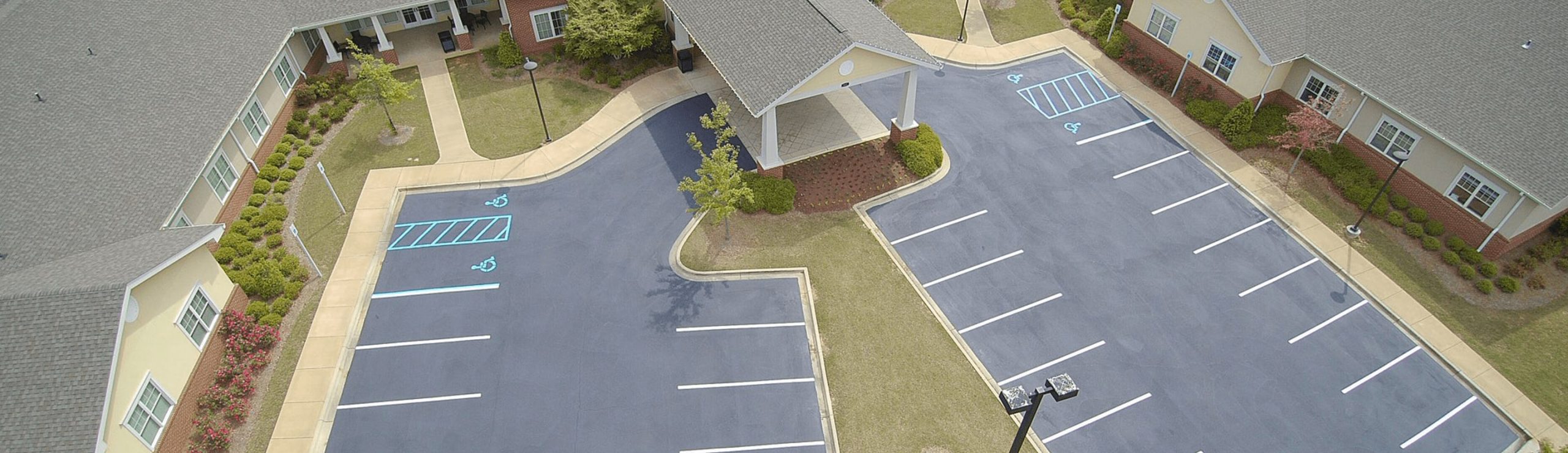

Asphalt sealcoating is a preventative maintenance procedure to protect and prolong the longevity of parking lots. A sealer acts as a waterproofing agent, minimizing the rate at which water enters the pavement. The protective pavement coating also reduces the depth to which oil, gas, or other substances can permeate the surface and break down the asphalt substrate. Finally, it reduces oxidation and helps the parking lot maintain a jet-black color for longer.
What is a Pavement Coating?
Sealcoating, also known as pavement coating, is a protective treatment applied to asphalt pavement to help preserve its surface and extend its useful life. The coating creates a barrier against damaging elements such as sunlight, water, oil, gasoline, and other contaminants that can accelerate pavement deterioration.
For best results, sealcoating should be applied nine to 18 months after the initial asphalt installation and reapplied every two to four years thereafter. Material selection and application methods depend on factors such as pavement condition, regional climate, and traffic patterns. In general, a two-coat process is most common. However, a property preparing for disposition, for example, may only require a single-coat application.
Types of Pavement Coatings
| Ideal for | Typical Lifespan | Notes | |
|---|---|---|---|
| Asphalt Emulsion | Low-traffic areas and environmentally sensitive applications | 2-4 years | Asphalt-based; Lower resistance to fuel |
| Coal Tar | High-traffic areas | 3-5 years | Coal-tar-based; Highly durable; Availability and environmental considerations may limit its use |
| Acrylic and Polymer-Modified | High-traffic areas | 3-5 years + | Asphalt based; enhanced with polymers to improve durability |

Asphalt Emulsion Sealers
Water-based, asphalt-based sealers that protect pavement from oxidation, weathering, and moisture. They are a common choice for general pavement maintenance and offer a lower-cost alternative to more specialized coatings.

Coal Tar Sealers
Coal-tar-based sealers known for their durability and strong resistance to water, oil, gasoline, and other chemicals. However, their use has declined due to environmental and regulatory concerns associated with PAHs.

Acrylic and Polymer-Modified Coatings
Specialty coatings formulated with acrylics or polymers to enhance properties such as durability, flexibility, adhesion, and resistance to wear. Depending on the formulation, they can provide performance advantages over conventional asphalt emulsion sealers.
Benefits of Pavement Coating for Commercial Parking Lots
Asphalt is made up of aggregate (which provides its strength) and liquid asphalt cement (which holds the stone together and provides its color). The main purpose of sealcoating is to protect the liquid asphalt cement (AC). Other benefits include protection against water, oil, fuel, and UV penetration. A freshly sealed parking lot also provides curb appeal and a fresh base for striping. Furthermore, incorporating sealcoating into a preventative maintenance program can significantly reduce pavement life-cycle costs while extending the useful life of the pavement.

Sealcoating or Resurfacing?
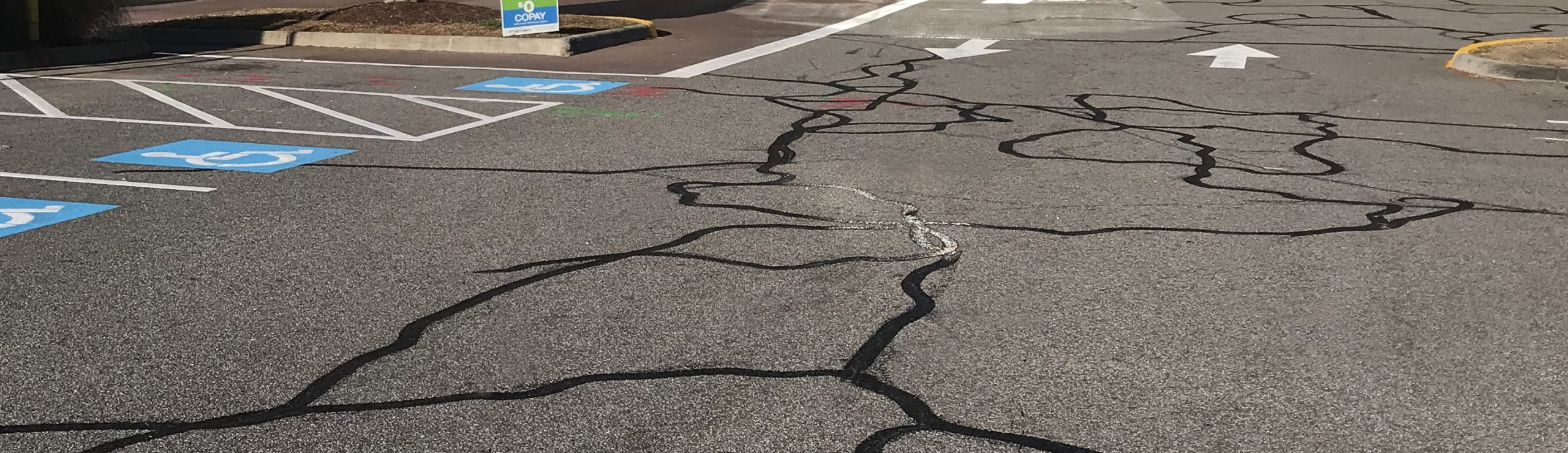
Even a perfect application of sealer will not repair cracks and other surface defects in asphalt parking lots. Our team can assess your parking lot to make sure the pavement is in proper condition to accept sealer. If there are widespread areas of deteriorated asphalt or if the pavement has been sealed too many times, for example, resurfacing may be necessary. Prior to applying sealer, our team will recommend addressing any surface defects including cracks, oil spots, potholes, and oxidized areas.
Our Local Sealcoating Contractors
Our sealcoating partners are local to your jobsite to ensure that sealer application occurs during proper temperature and weather conditions. On the day of the job, the pavement and ambient air temperature should be at a minimum of 50°F (and rising) and a maximum of 95°F. There should be no rain, fog, or frost for 24 hours prior to and after application. Once complete, traffic should be kept off a newly sealed surface for a minimum of 24 hours. This timeframe is necessary for the asphalt sealer to dry and begin its initial cure.
How Often Should You Sealcoat?
After initial application, asphalt sealcoating should be budgeted for and performed every 24 to 48 months. If the process is done more frequently, sealer may build up on the asphalt – resulting in cracking and peeling. On the other hand, if too much time has passed without sealcoating, pavement will be exposed to the elements.
Sealcoating FAQs
Is sealcoating the same as pavement coating?

Yes. Sealcoating and pavement coating are commonly used interchangeably to describe the application of a protective coating to asphalt pavement. Sealcoating is the more commonly used industry term, while pavement coating is a broader term that may be used to describe the same process.
Can you sealcoat over cracks?
Sealcoating can be applied over hairline cracks, but larger cracks should be repaired before the pavement is coated. As a general guideline, cracks wider than approximately 1/4 inch should be cleaned and sealed with a crack-sealing material before sealcoating. Proper crack preparation helps ensure the coating is applied to a sound, properly prepared surface.
How long does sealcoat take to dry?
Although seal coating is a rather quick application process, the drying and cooling time is lengthy (traffic should be kept off a newly sealed surface for a minimum of 24 hours). If this time frame is not strictly adhered to, car tires may lift uncured sealant from the surface leaving patches of unsealed pavement. It is also important to refrain from using sprinklers near the area, hosing down, or washing the area for 48 hours before and after work is completed.
What does sealcoating cost?
Asphalt sealcoating cost varies based on material and application process, both of which are dependent on a range of factors including pavement condition, climate, and location. With the help of our local sealcoating contractor network, we will advise you on the right product and process for your jobsite.
Work with a Local Expert in Sealcoating
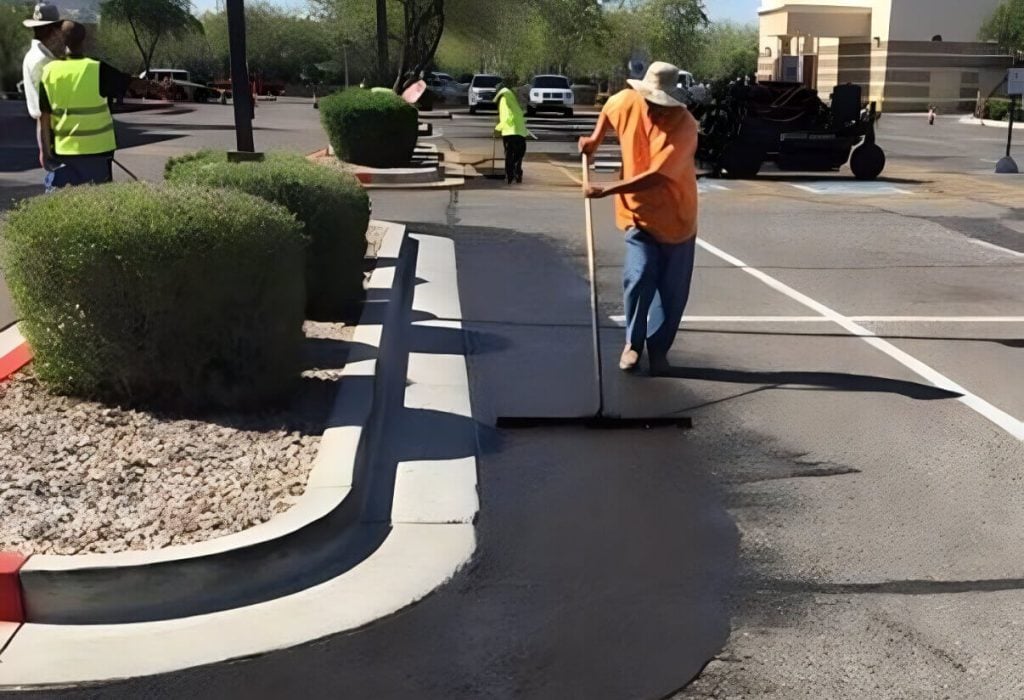
In addition to material, the right application technique is crucial and will vary based on specific region and site condition. We work with local asphalt sealcoating contractors from our pre-qualified network who know the region and land quality to determine which application, i.e. spray system or squeegee, and number of coats is best for your jobsite.
Want to see Let’s Pave in action? Check out our video gallery.
WATCHMore Services