



Using Pavement Assessments to Prioritize Projects and Plan Ahead
If you’re responsible for maintaining multiple parking lots or paved assets, you’re facing a familiar challenge: there are always more needs than available budget dollars.
As organizations begin planning for 2027 capital expenditures, many facility managers and property owners are asking the same questions:
Which pavement projects should I tackle first?
How do I justify those projects to leadership?
The answer starts with professional pavement assessments.
A pavement assessment provides the data needed to understand current conditions, prioritize repairs based on risk and cost, and create a data-driven capital plan that leadership can support. Rather than relying on assumptions or reacting to complaints, you gain a clear roadmap for protecting your pavement assets while making the most of your budget dollars.
How to Prioritize Limited Dollars
An assessment will help you determine what to tackle first with a limited budget. When conducted by a reputable paving partner, the data collected replaces guesswork with objective data. Conditions such as cracking, rutting, ponding, surface wear, and structural deterioration are documented and evaluated to provide a clear picture of asset condition. The resulting analysis helps you prioritize repairs, allocate limited budget more effectively, and identify assets that can be safely deferred. Just as importantly, the assessment serves as the foundation for a phased pavement management plan, helping organizations forecast needs and budget strategically over the next three to five years.
The Cost of Doing Nothing
A key outcome of a pavement assessment is understanding the financial impact of doing nothing.
For example, a parking lot requiring crack sealing and sealcoating today may need only a modest investment to extend its service life. If maintenance is deferred, however, that same pavement may eventually require extensive patching, milling, or full-depth reconstruction at a significantly higher cost. A pavement assessment helps identify these opportunities before deterioration accelerates.
How to Justify Paving Projects
One of the biggest challenges facing facility managers is explaining why pavement work deserves funding when there are competing priorities throughout the organization.
Leadership teams are often looking for clear answers to questions such as:
- Why is this project necessary now?
- What happens if we wait?
- How much risk are we accepting by deferring repairs?
- Which projects provide the best return on investment?
- How should funding be allocated across multiple properties?
A pavement assessment provides documented evidence to support those conversations.
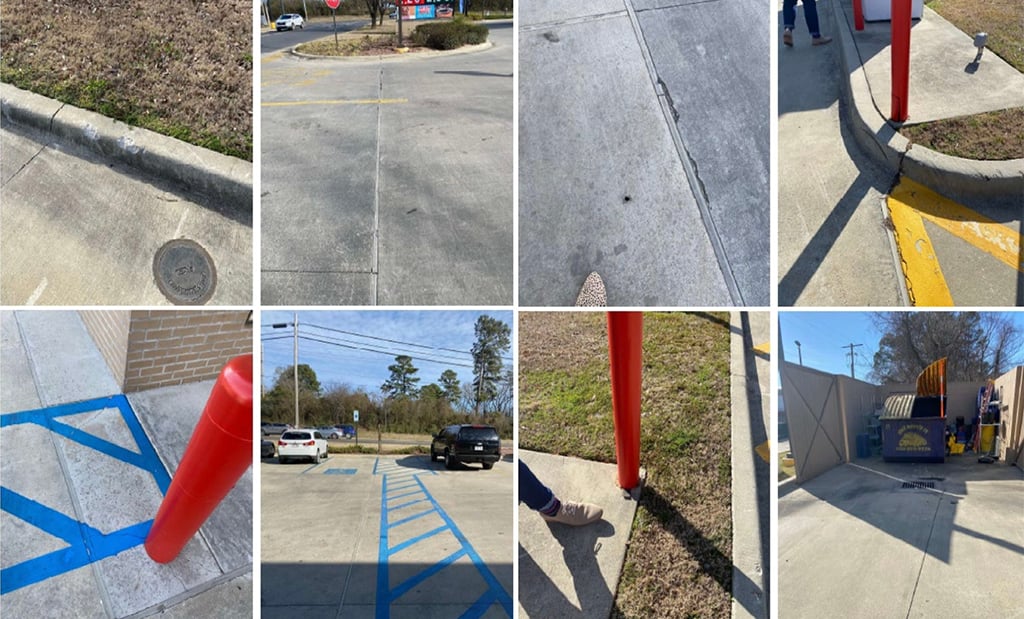
Instead of saying, “The parking lot looks bad,” you can present current condition data, photographic documentation, recommended repair strategies, estimated costs, and multi-year capital planning scenarios.
This transforms pavement projects from subjective requests into data-driven business decisions.
Building a Pavement Management Plan
For multi-site portfolios, pavement assessments are particularly valuable because they help create a prioritized capital roadmap. Rather than requesting funding for every property at once, facility managers can organize projects into phases based on condition and risk. This approach helps leadership understand future funding needs while avoiding large, unexpected capital requests.
A typical plan may include:
Immediate Projects (0-12 Months)
Assets with safety concerns, significant deterioration, drainage issues, or accelerated failure.
Near-Term Projects (1-3 Years)
Assets requiring preventive maintenance to preserve condition and avoid major repairs.
Future Projects (3-5 Years)
Assets currently performing well but expected to require investment in future budget cycles.
Questions to Ask During an Assessment
To maximize the value of an assessment, be sure to partner with a provider that can help you answer:
- Which assets are at greatest risk of failure?
- What repairs should be completed immediately?
- Which projects can safely be deferred?
- Where can preventative maintenance provide the greatest return?
- What are the projected costs over the next three to five years?
- How can projects be phased to align with budget constraints?
What you uncover together creates a practical framework for both project prioritization and capital planning.
Assess Your Sites Now
By conducting a pavement assessment now, you can identify needs early, prioritize projects strategically, and enter 2027 budget discussions with the documentation and data leadership expects.
Let’s Pave can help! Together, we’ll make the most of your budget dollars using objective condition data. Contact us to schedule your assessment today!
.