
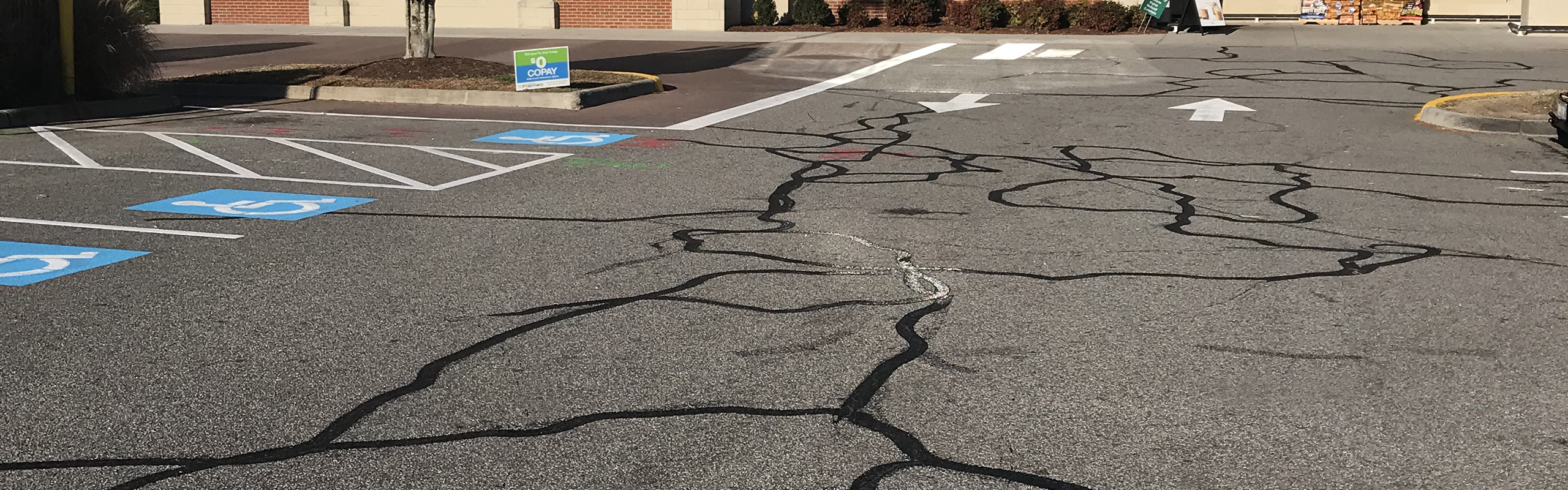



Cracks, potholes, and deteriorating asphalt are common issues in commercial parking lots. While some damage results from everyday wear and tear, other problems can indicate more serious issues beneath the pavement. Knowing which repair method to use can help property owners address damage early and avoid unnecessary expenses.
Two common asphalt repair methods are infrared asphalt repair and crack sealing. Although both help maintain pavement, they serve different purposes.
Understanding Infrared Asphalt Repair
Infrared Asphalt Repair Procedure
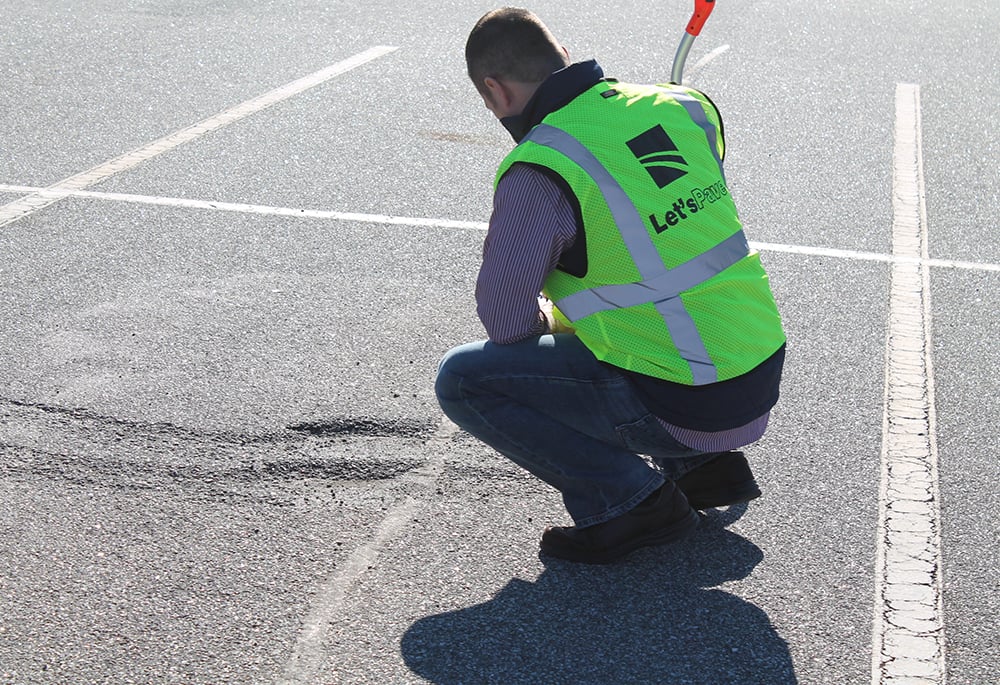
Infrared asphalt repair uses specialized heating equipment to soften existing asphalt so it can be reworked and repaired. Once the pavement reaches the proper temperature, workers loosen the damaged material, add fresh asphalt if needed, and compact the repaired area. Unlike traditional patching methods that often require cutting out and removing damaged pavement, infrared repair allows contractors to reuse some of the existing asphalt. The process can also create a smoother transition between the repaired section and the surrounding pavement. Infrared repair is generally best suited for localized surface damage when the underlying pavement structure is still in good condition.
Best Uses for Infrared Asphalt Repair
Infrared asphalt repair solves these common pavement problems:
- Shallow potholes: Repairing small, damaged areas before they spread.
- Surface deterioration: Restoring sections where asphalt has become rough, worn, or damaged.
- Uneven pavement: Correcting certain minor surface irregularities.
- Localized damage: Addressing small sections without removing and replacing larger areas of pavement.
A word of caution: If damage extends into the underlying base or the pavement has significant structural problems, infrared asphalt repair may not be suitable. Instead, more extensive repairs may be necessary.
Understanding Crack Sealing
Crack Sealing Repair Procedure
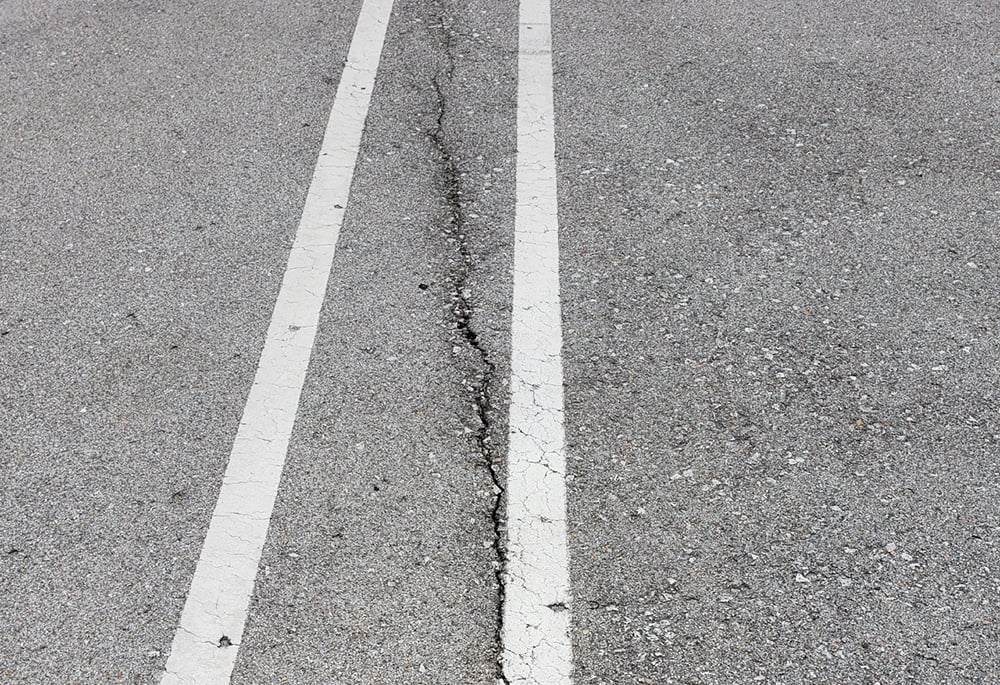
Crack sealing helps reduce water infiltration by applying a flexible sealant that accommodates normal pavement movement.
Before applying the sealant, workers clean and prepare the cracks to help the material bond properly. Next, hot-pour material is injected into and over the uncut crack using a hand-operated wand. The appropriate band configuration is determined by factors such as crack type, traffic load, and budget.
Best Uses for Crack Sealing
When surrounding asphalt remains structurally sound, crack sealing helps prevent water infiltration problems on the following crack types:
- Longitudinal cracks: Cracks that run parallel to traffic.
- Transverse cracks: Cracks that extend across the pavement, often caused by temperature changes.
- Block cracks: Cracks that intersect at right angles to form a series of square-shaped sections in the pavement.
- Edge cracks: Cracks that develop along the outer edges of pavement, often caused by inadequate support or drainage issues.
- Working cracks: Cracks that expand and contract with seasonal temperature changes.
- Water infiltration: Open cracks that allow moisture to reach underlying pavement layers.
A word of caution: Crack sealing won’t repair potholes, replace missing asphalt, or correct a failing pavement base.
Repair vs. Maintenance: Comparison Chart
The biggest difference comes down to the type of damage being addressed. Infrared asphalt repair restores areas where the pavement surface has already deteriorated. Crack sealing protects existing pavement by limiting water and debris infiltration.
| Feature | Infrared Repair | Crack Sealing |
|---|---|---|
| Primary Purpose | Repair localized damage | Protect cracks from water and debris |
| Best Applications | Shallow potholes, worn areas, surface defects | Suitable longitudinal, transverse, working cracks |
| Process | Heat, rework, and compact asphalt | Clean, prepare, and seal cracks |
| Adds Asphalt Material | When needed | No |
| Prevents Water Intrusion | Helps when properly repaired | Helps by sealing cracks |
| Repairs Structural Damage | No | No |
| Maintenance Type | Corrective repair | Preventative maintenance |
Frequently Asked Questions
Can Infrared Asphalt Repair and Crack Sealing Be Used Together?
Many commercial parking lots benefit from a combination of repair and preventative maintenance methods. A parking lot might have a few shallow potholes near high-traffic areas along with cracks throughout otherwise stable pavement. In that situation, infrared repair may be used to restore the damaged sections, while crack sealing can help protect the remaining pavement. Using both methods allows property owners to address different conditions without treating every area the same way.
Which Asphalt Repair Method Is More Cost-Effective?
Crack sealing generally has a lower upfront cost than infrared asphalt repair because it treats existing cracks rather than reworking damaged pavement. The typical range for sealing cracks is $1-2 per linear foot. The range for infrared asphalt repair is $3-8 per square foot.
Actual repair costs depend on several factors, including the size of the affected area, severity of damage, material requirements, accessibility, and condition of the underlying pavement.
For commercial property owners, the goal should be to address damage before it becomes more extensive while avoiding repairs that aren’t needed.
What if the Parking Lot Has More Extensive Damage?
Not every parking lot can be repaired with infrared technology or crack sealing. Widespread potholes, extensive alligator cracking, significant settlement, or large areas of deteriorated asphalt may require a more comprehensive approach. Depending on the condition of the pavement, options may include traditional asphalt removal and replacement, milling and resurfacing, or reconstruction.
The important thing is understanding the condition of the pavement before deciding on a solution.
What is the Root Cause of the Damage?
It’s not always easy to tell how serious pavement damage is just by looking at the surface. A pavement assessment helps identify existing damage, evaluate overall pavement conditions, and determine which maintenance or repair methods make sense.
Having a clearer picture of pavement conditions can make it easier to plan maintenance, manage costs, and avoid unnecessary work. For property and facility managers with multi-site portfolios, regular assessments can also prioritize repairs across locations.
Get The Right Solution for Your Pavement Assets
Infrared asphalt repair and crack sealing both play an important role in repairing and maintaining commercial parking lots. Knowing when to use each method can help extend pavement life, reduce unnecessary expenses, and keep parking areas in better condition.
Let’s Pave helps commercial property owners and facility managers across all 50 states assess pavement conditions and determine the right approach to repairs and maintenance.
Contact Let’s Pave to discuss a pavement assessment and find the right solution for your property.
Let’s Talk Today!
