
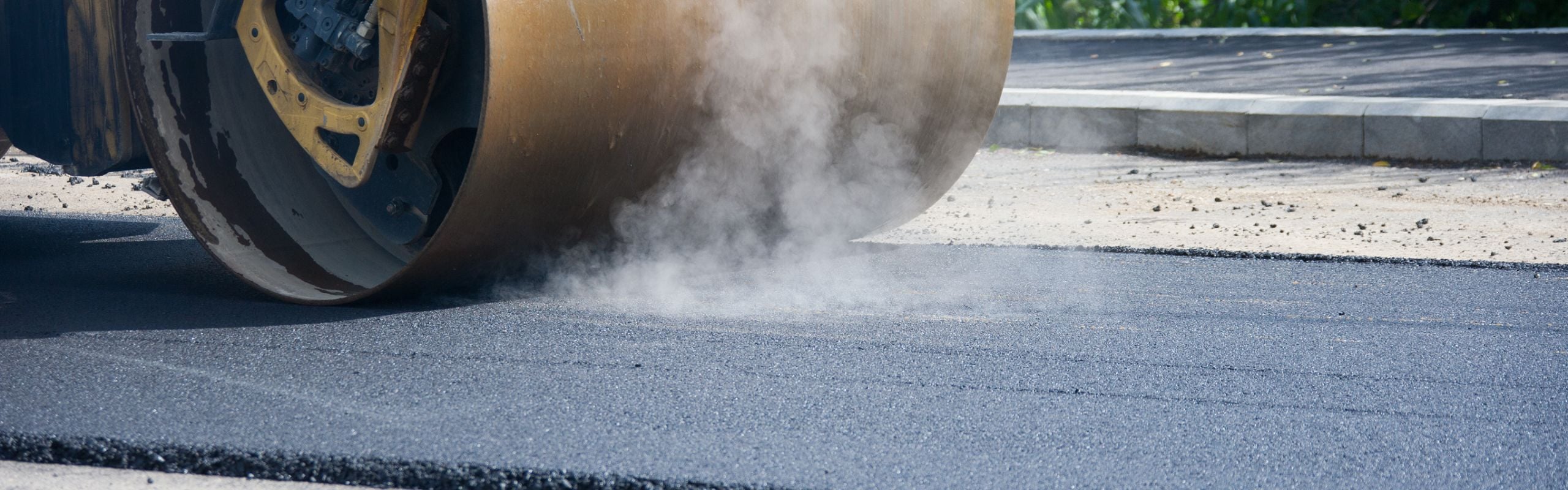



When asphalt parking lot problems arise, the key question isn’t always how to repair them—it’s determining what needs to be repaired, how extensive the damage is, and when to address it. A pothole or deteriorated section may call for a temporary repair or full-depth patching, while widespread damage may make resurfacing or repaving the better investment.
Cost, pavement condition, repair method, and timing all play a role in determining the right approach. In this guide, we’ll look at common asphalt paving services, what they cost, how patching methods compare, when patching makes more sense than repaving, and why the timing of repairs matters.
How Much Do Parking Lot Repairs Cost?
Generally speaking, when defects are caught early, the cost to repair them will be less than if maintenance is deferred. For example, patching typically costs between $2-3 per square foot vs. $3-10 per square foot for resurfacing. Of course, this is only a range, and actual cost depends on variables such as patch depth, patch area, base condition, and mobilizations required.
The best way to control pavement maintenance costs is through routine inspections that identify issues early, when they can be addressed with the most cost-effective solution. Following recommended product application conditions is equally important. Applying materials under the wrong conditions can compromise their effectiveness, shorten their service life, and lead to more costly repairs down the road.
What Services Are Often Needed in Parking Lot Repairs?
A good pavement management plan consists of four primary procedures: patching, parking lot crack repair, sealcoating, and lot marking. Patching addresses localized areas of pavement damage before they worsen and require more extensive repairs. By removing failed asphalt and replacing it with a durable new surface, patching helps restore structural integrity, improve safety, and prevent water from penetrating deeper into the pavement. Crack sealing is the most cost-effective asphalt parking lot repair. It is crucial to perform as early as possible (when cracks measure ¼-inch to 1-inch wide) to minimize water infiltration which, if left untreated, can permeate through cracks and quickly erode the sub-base. Once cracks have been treated, it is recommended to perform sealcoating. Parking lot sealing provides a protective barrier against UV rays, water, and salt as well as oils and gasoline. Without it, these elements can more easily penetrate the surface and break down the fines, binder, and stones. After sealcoating, the finishing touch is lot marking. Clearly marked stalls, loading zones, and entrances/exits help to direct traffic safely around any facility.
Parking Lot Patching: Methods Compared
Patching can be a cost-effective alternative to repaving—but not every patching method is suited to every pavement problem. The key is matching the repair to the depth and severity of the damage.
| Type | Best For | Expected Lifespan | Notes |
|---|---|---|---|
| R&R | Deep structural failure | 10-15+ years | Most durable option |
| Skin Patching | Surface level deterioration | 3-7 years | Not suitable for base failures |
| Infrared | Localized surface deterioration | 3-7 years | Seamless repair with minimal waste |
| Cold Patch | Emergency pothole repairs | Weeks to months | Temporary solution |
Remove and Replace (Full-Depth Patching)
Remove and replace (R&R) is the most comprehensive patching method for pavement failures that extend through the asphalt and into the base. The damaged area is saw-cut and removed, the underlying base is repaired as needed, and new asphalt is installed.
Skin Patching (Surface Overlay Patch)
Skin patching addresses surface-level pavement deterioration without removing the full depth of existing asphalt. A thin layer of asphalt is applied over the damaged area, providing a cost-effective solution for shallow cracking, raveling, and other localized surface defects.
Infrared Asphalt Repair
Infrared asphalt repair uses heat to soften existing asphalt, allowing the damaged area to be reworked and blended with new asphalt. Because the existing pavement is reheated rather than removed, the process creates a seamless repair while minimizing waste and material costs.
Cold Patch for Emergency Pothole Repair
Cold patching provides a quick, temporary solution for potholes when permanent repairs cannot be performed immediately. The cold-mix material can be placed without heating, making it useful for emergency repairs during cold weather or other conditions when conventional asphalt installation is impractical.
When is Patching Better than Repaving?
When pavement damage is localized, patching can be a smarter alternative to repaving the entire parking lot. Rather than removing and replacing otherwise serviceable pavement, targeted repairs address the areas that actually need attention—reducing material, labor, and installation costs while minimizing disruption to your property.
The key is determining whether the damage is isolated or widespread. Full-depth patching can correct localized failures that extend into the pavement base, while surface repairs can address deterioration that is shallow or confined to the upper layers. As a general guideline, when cracked pavement covers more than roughly 25–30% of the lot, repaving usually becomes the more cost-effective option.
When the surrounding pavement remains structurally sound, targeted repairs can extend the life of the parking lot and delay a much larger capital investment. Patching also allows property owners to prioritize repairs, spread maintenance costs over time, and preserve pavement that still has useful life remaining.
Why You Should Repair Asphalt Parking Lots in Winter
Late winter is a great time to plan for and perform parking lot maintenance for a variety of reasons.
- Weather Conditions – It is possible to perform crack sealing and lot marking in mid-March, when the weather begins to warm up, provided you adhere to the proper application conditions. For crack sealing, most product manufacturers recommend an ambient air and surface temperature of 40°F or above. For striping projects, acetone acrylic paints can be applied when surface and air temperatures are 40°F and above (up to 90°F). But, for optimal results, the air temperature should be at least 5°F above dew point and relative humidity should measure below 85%. After a long winter, potholes may be prevalent, too. Repairs can be executed this time of year using premium cold mix asphalt. This product can be applied in temperatures as low as 15°F.
- Supply and Demand – When supply and demand are equal, the price of goods—in this case, asphalt—is at a fair market value. For the asphalt industry, the closest state of equilibrium occurs earlier in the year when asphalt plants re-open and produce or supply the same amount of material being demanded. Therefore, for the best bet and bang for your buck, late winter or early spring can be an ideal time of year to buy pavement services.
- Labor Availability – Beginning in late winter and early spring, many paving contractors begin ramping up operations. They tend to employ more crew members and back-office support and operate extended hours. Their availability and capability to complete a greater number of projects for a cluster of job sites increases. For facility managers with multi-site portfolios, this translates to fewer mobilizations, reduced travel costs, and–oftentimes–savings for buying material in bulk.
- Budget – For most organizations, facility managers have access to more funds in the beginning of the year versus any other time. This means more money to complete asphalt parking lot repairs.
- Aesthetics – Last but not least, a job completed in late winter or early spring will make a great impression for a longer period of time compared to projects executed later in the year, which are then subject to harsh weather conditions and their damaging effects.

